
When people picture an AI employee answering the phone, they usually picture it stopping at “thanks for calling.” Answer the call, take a message, done. That’s the front door. It’s not the house.
Answering is where the relationship starts, not where it ends. In the calls we recorded, the phone getting picked up was the opening move. What made each one worth anything was everything that happened after. You can watch all four in the demo.
Just answer, and you’re ahead
Start with the front door, because most businesses lose right there. When a call goes unanswered, 82% of callers just call a competitor. Picking up, every time, already puts you ahead of most of your market.
And being first to answer often wins the whole relationship, not just the call. In real estate, the National Association of Realtors found that 77% of repeat buyers interviewed only one agent before choosing. Most people don’t shop around once someone competent has already helped them. Whoever opens the door first usually keeps the customer.
Past the door: qualify, quote, book, follow up
Here’s the part that makes answering worth it. The same AI employee that picks up can carry the call the rest of the way.
- It asks the few questions you’d want asked, so a real lead is sorted from a tire-kicker before it reaches you.
- It quotes from your live catalog, so the number the caller hears is one you’d actually stand behind.
- It books the appointment straight onto your calendar, with the details attached.
- It follows up afterward, the confirmation, the reminder, the “are we still on,” without anyone remembering to.
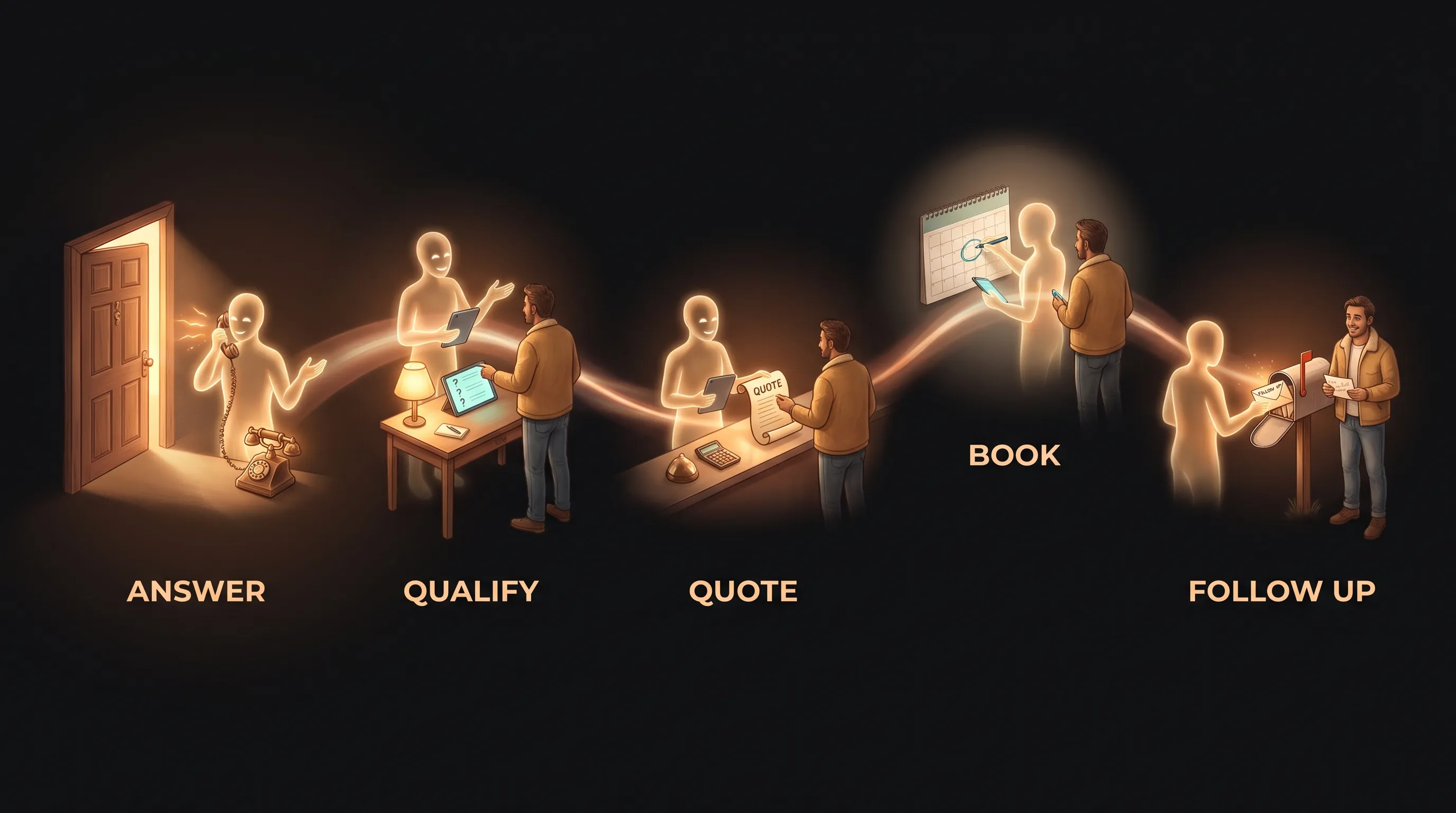
Every one of those lands in the systems you already run. The point isn’t a pile of features. It’s that one caller gets handled end to end, instead of getting answered and then dropped.
It hands off to a person
None of this is either/or. The AI employee takes the repeat calls, the after-hours ones, the “is my order ready yet” that shouldn’t cost a person an hour. The calls that need real judgment go to a human, with the context already written up.
That handoff is the part that earns trust. You’re not replacing the people who are good with your customers. You’re making sure the overflow doesn’t ring out to a competitor while they’re busy. Someone still steers the hard calls, and that someone is you.
So start at the front door, because it’s the piece you can measure: the calls you’re missing today and the customers walking to whoever answered. Get that working, then let it go deeper, one step at a time. On choosing that first step, we wrote which job do you hand to AI first, and on what we actually count once it’s running, the ROI we actually measure.