
I’m Alejandro, one of the co-founders of RSTS AI. For months we did what everyone in this space does: we described what an AI employee could do. Better on the phones, faster on leads, always available. It’s all true, and none of it lands, because every company selling AI says the same thing.
So we stopped describing it. We recorded four real calls, start to finish, and put them online. You can watch all four in the demo. This post is about why we did that, and what recording it taught us that describing it never did.
Why a description never lands
Buyers have heard the pitch. They’re numb to “our AI is amazing,” because they’ve been burned by a phone menu that couldn’t understand them and a chat window that couldn’t answer a real question. Words don’t move that needle anymore.
What moves it is watching the thing work on a normal call. And the bar is lower than you’d think, because even the pros miss the basics. When a research firm secret-shopped 500 law firms, only 40% actually answered the phone. Not because anyone was slacking, but because they were in a hearing or with another client. Showing a call that gets answered, handled, and logged is more persuasive than any adjective. We made that argument in stop reading case studies, and recording the calls was us taking our own advice.
What the four calls show
The point of the four is that it’s one AI employee, not four. Same engine, four businesses, and the script bends to whatever each one needs.
- A local meat market takes an order over the phone, in Spanish, and writes it into the shop’s system with a pickup time.
- A law firm handles the intake with some empathy, gathers the details, and books a consultation on the calendar.
- A real estate agent answers a Sunday-night question about a listing and locks in a Saturday showing.
- An auto shop quotes an oil change, asks for the year, make, and model, and offers two time slots.
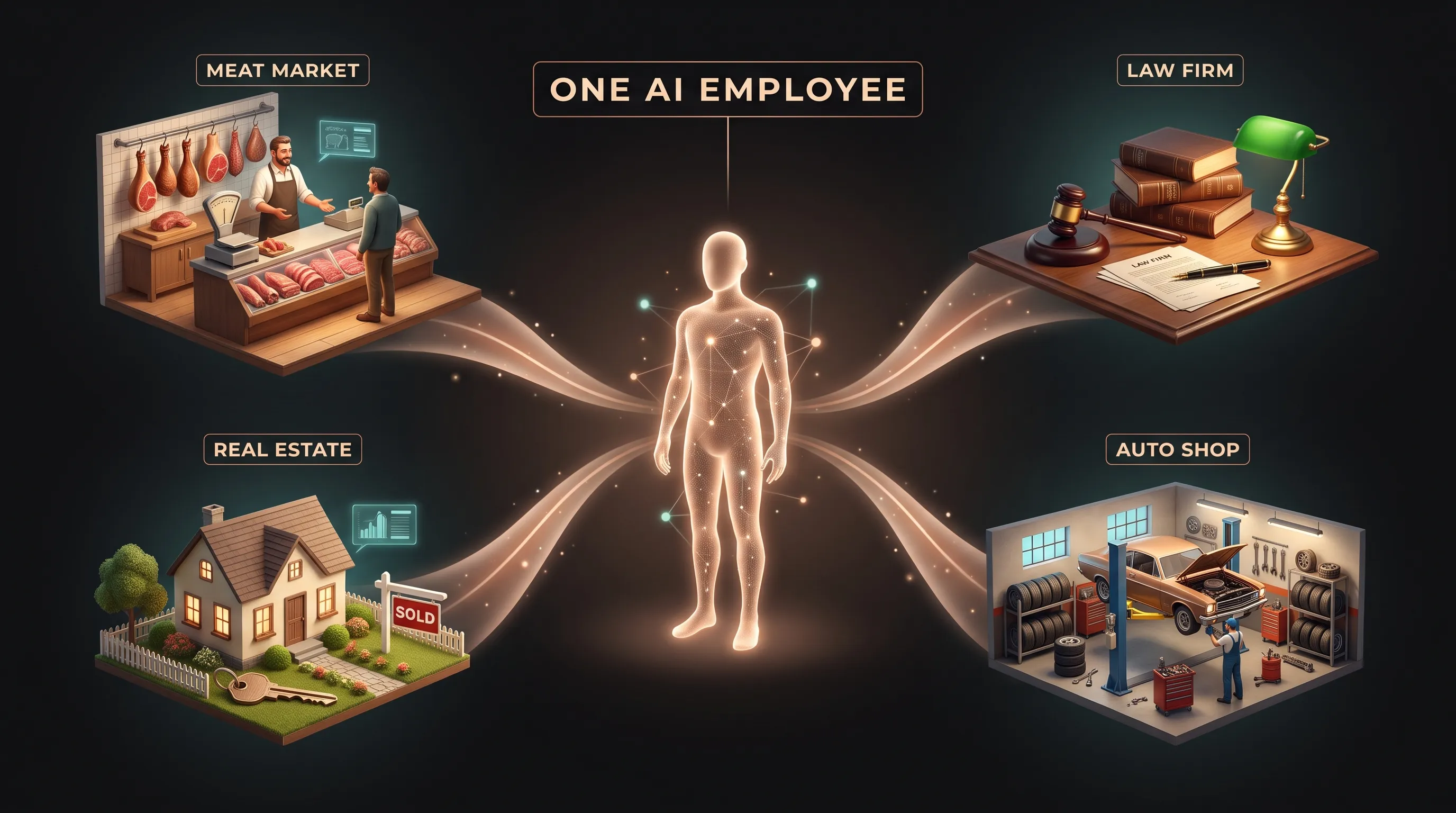
None of those businesses run the same way. The meat market cares about the catalog. The law firm cares about how a scared caller is treated. The agent cares about speed. The auto shop cares about getting the vehicle right. One AI employee, shaped to each.
What recording it actually taught us
Here’s the honest part. The call is the easy 20%. It’s the part that demos well and the part everyone films.
The 80% you don’t see on the video is where the work is. Reading from a live catalog so the AI employee never quotes something that isn’t real. Writing the order or the booking into the system the business already uses, correctly, every time. Handing off to a person the moment a call needs judgment, with the context already written up. Catching the odd request that doesn’t fit the script. That plumbing is what separates a call that sounds good from an AI employee you can actually leave the phones with. We wrote about that gap in the demo is the easy 20%, and recording these calls made it concrete for us all over again.
So don’t take my word for any of it. Watch the four calls, then picture the same thing answering your phone, in your customer’s language, writing into your system. That’s the pitch now. Not what I say it does, but what you can watch it do.