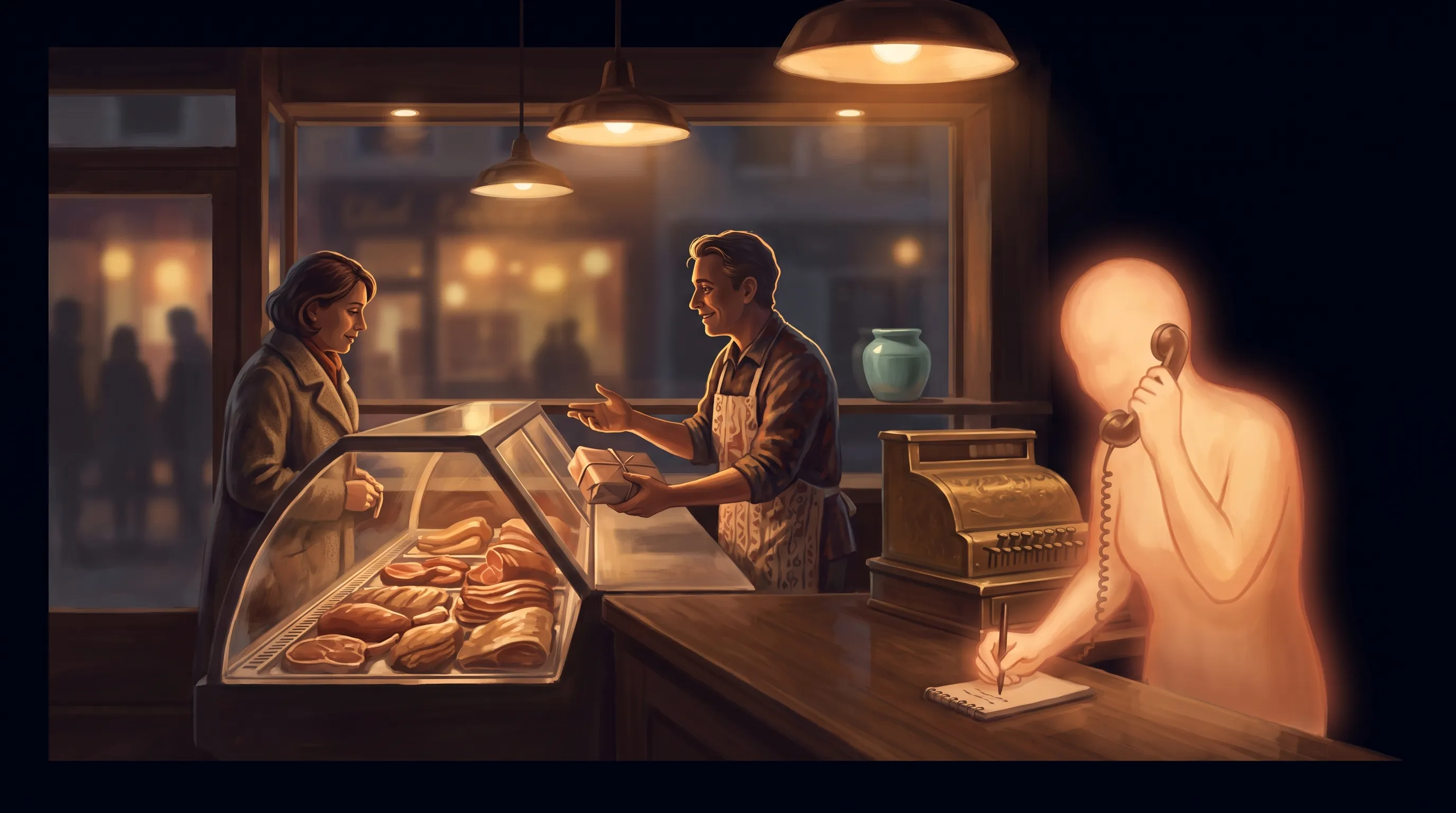
“Buenas, ¿tiene New York strip?” The caller opened in Spanish. The voice on the other end answered in Spanish without missing a beat, took the order, set aside one New York strip for a five o’clock pickup, read the whole thing back, and logged it. Then it went to the next call.
That voice was Rosa, an AI employee answering the phone for a local meat market. You can hear the call, along with three others, in a short demo we recorded. What makes it worth two minutes is not that it sounds human. It’s that the order was real, the catalog was real, and it landed in the shop’s system without anyone lifting a finger.
Here’s why answering the phone at a busy counter is worth more than it looks. In a 2025 survey of a thousand consumers, 78% said they had given up on a business after a call went unanswered, and 82% said they simply called a competitor. A missed call at the counter isn’t one lost sale. It’s a regular handed to the shop down the street.
The old way
Picture a Saturday at the counter. Here’s how the orders leak:
- The one person at the register is already helping a customer, cutting an order, and running a card. The phone rings behind all of it.
- It rings out. The caller doesn’t leave a message. They dial the next shop on the map.
- When the phone does get answered, it’s rushed. The order gets scribbled on a pad between customers, and “two ribeyes, thick cut” turns into something else by the time it’s filled.
- A caller who only speaks Spanish reaches a clerk who only speaks English, so the order never gets placed at all.
- Nobody writes the order into the system, so there’s no record, no pickup time anyone can find, and no way to follow up.
Every one of those is a reasonable person with too much in their hands. Stacked up over a weekend, they turn into lost orders nobody ever sees, because a missed call leaves no trace.
The AI employee way
Same Saturday, except the shop has an AI employee named Rosa answering the phone. Rosa has read the shop’s Business Brain, so she knows the cuts, the catalog, the pickup windows, and how the shop likes an order written up.
Here’s the same rush:
- Every call gets answered on the first ring, even when all the lines go at once and the counter is slammed.
- Rosa answers in the language the caller uses. When someone opens in Spanish, she stays in Spanish for the whole call.
- She quotes from the live catalog, so the cut, the weight, and the total she reads back are the real ones, not a guess.
- She reads the order back before she books it, sets the pickup time, and writes it straight into the shop’s system with a name and a number attached.
- Anything genuinely odd, a special-order cut, a wholesale question, an upset caller, she hands to a person with the details already written down.
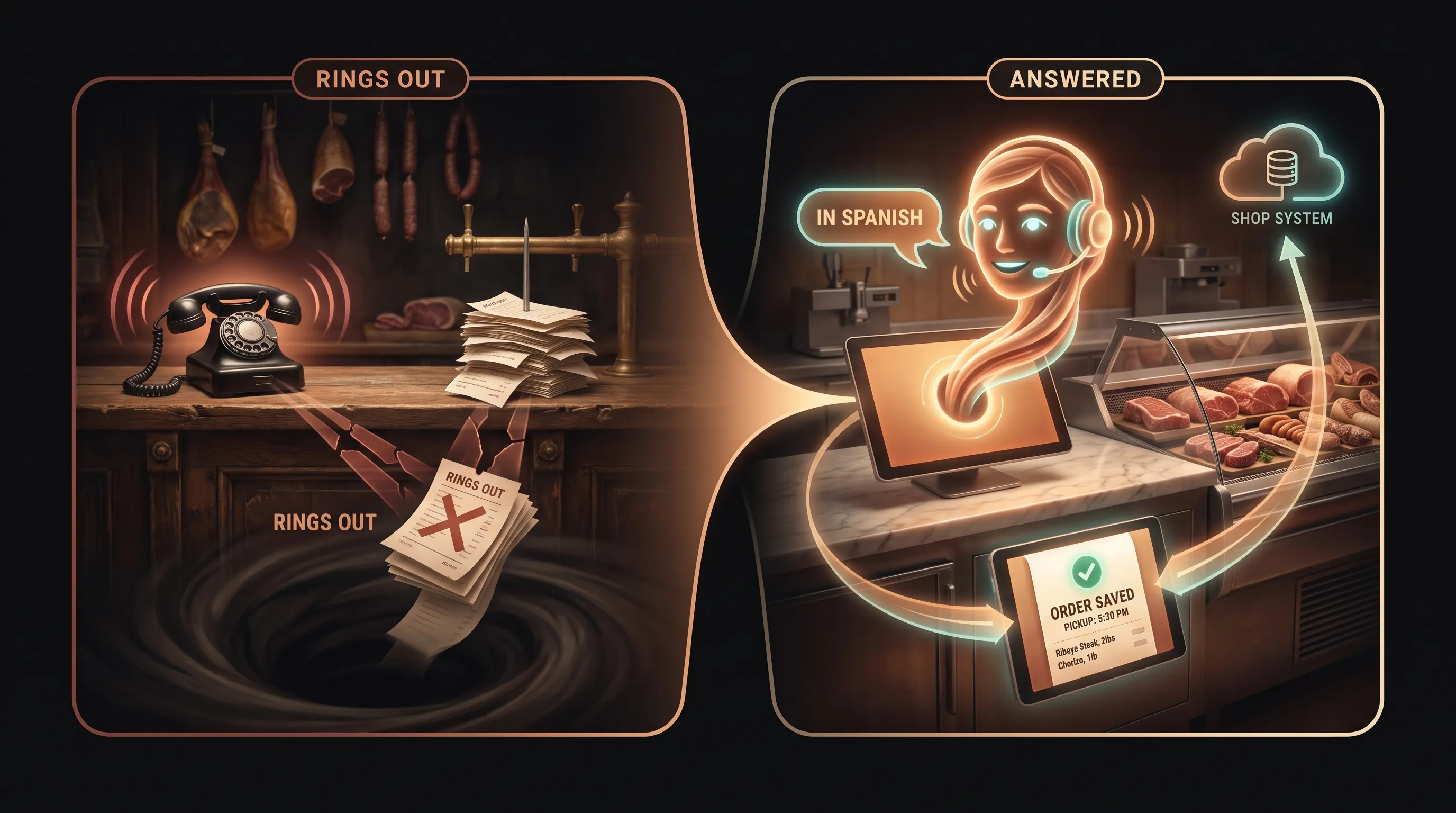
The order that would have rung out gets taken. The Spanish-speaking regular who would have hung up gets served. And the person at the counter gets to stay with the customer in front of them.
Why the tools you tried didn’t do this
Maybe you’ve tried a phone menu, or one of those voice assistants that reads a script. It answered, technically, but it didn’t know your catalog, couldn’t take a real order, and couldn’t switch to Spanish mid-sentence. So it annoyed callers and you turned it off.
That’s not because the idea is wrong. It’s because a generic system doesn’t know your shop. A $20 ChatGPT subscription can hold a conversation, but it can’t see your catalog or write to your system, so it can’t actually take the order and make sure it’s there when the customer walks in.
Rosa works because of what sits behind her: a Business Brain built from how your shop actually runs. That’s the piece the generic version was missing. She also gets sharper over time, because by month six she knows your busiest windows and your regulars’ usual orders better than a new hire would after a year. If you’re weighing her against the cheap version, we took that apart in the $40 AI that never picks up the phone, and on where to point her first in which job do you hand to AI first.
The counter is a good place to start for one plain reason: you can count the loss. 78% of callers give up after one unanswered call, and 82% of them call someone else. Answer every call, in the caller’s language, and get the order into the system every time, and the orders stop walking down the street.