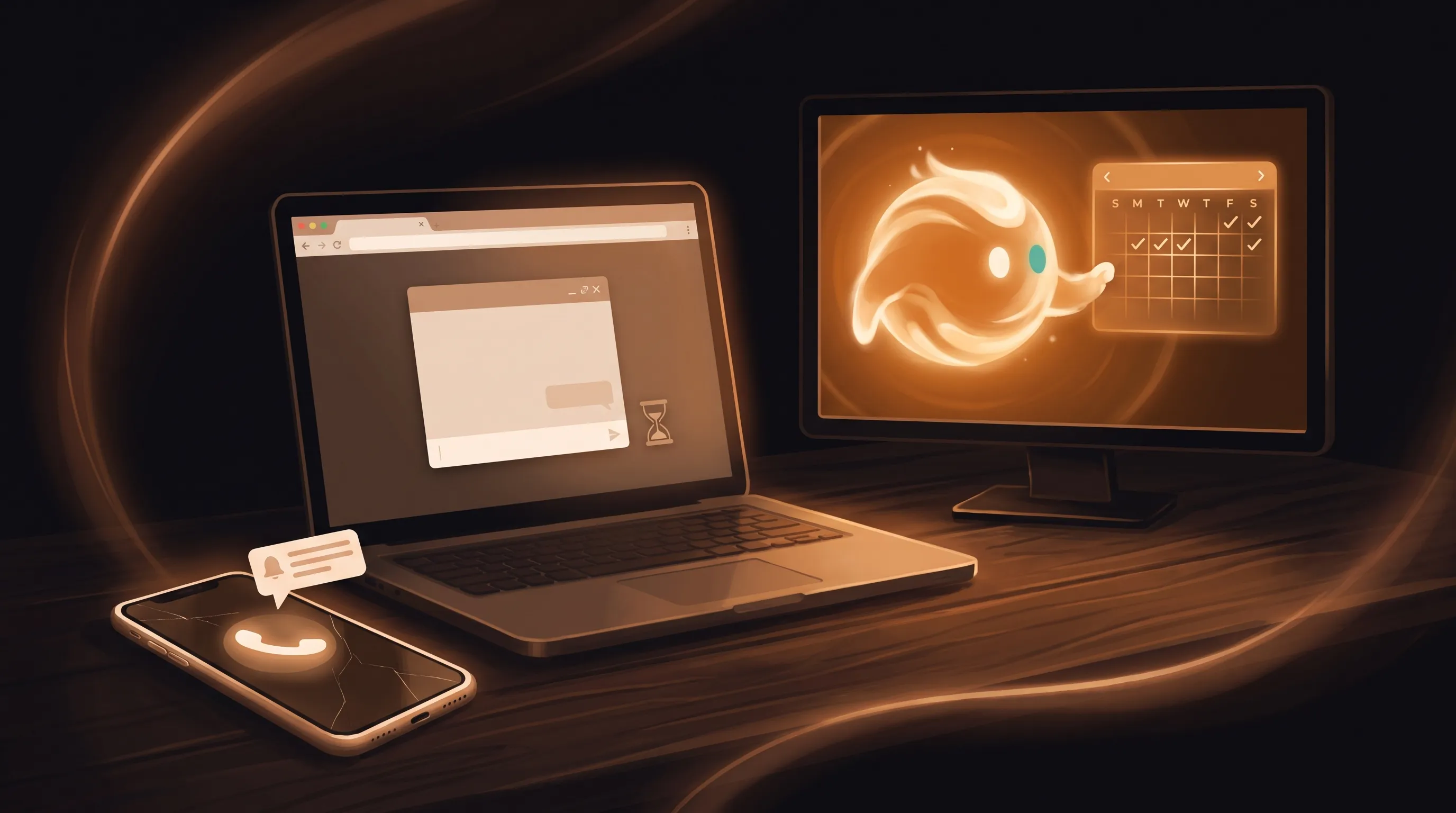
A customer calls your shop at 7:14 pm. Nobody’s there. The call rolls to voicemail, they hang up, and they dial the next name on their list. Somewhere in a browser tab you’re paying forty dollars a month for AI that could have handled it — except that AI doesn’t answer phones. It waits for you to come type at it.
That’s the quiet catch most owners have already walked into. You bought AI. It just isn’t doing the job.
Almost everyone already pays for it
This isn’t a story about businesses that haven’t adopted AI. They have. JPMorgan Chase looked at 4.6 million small businesses and found that close to two-thirds already pay for it — usually a couple of seats at around forty dollars a month, as strategist Nate B. Jones breaks down.
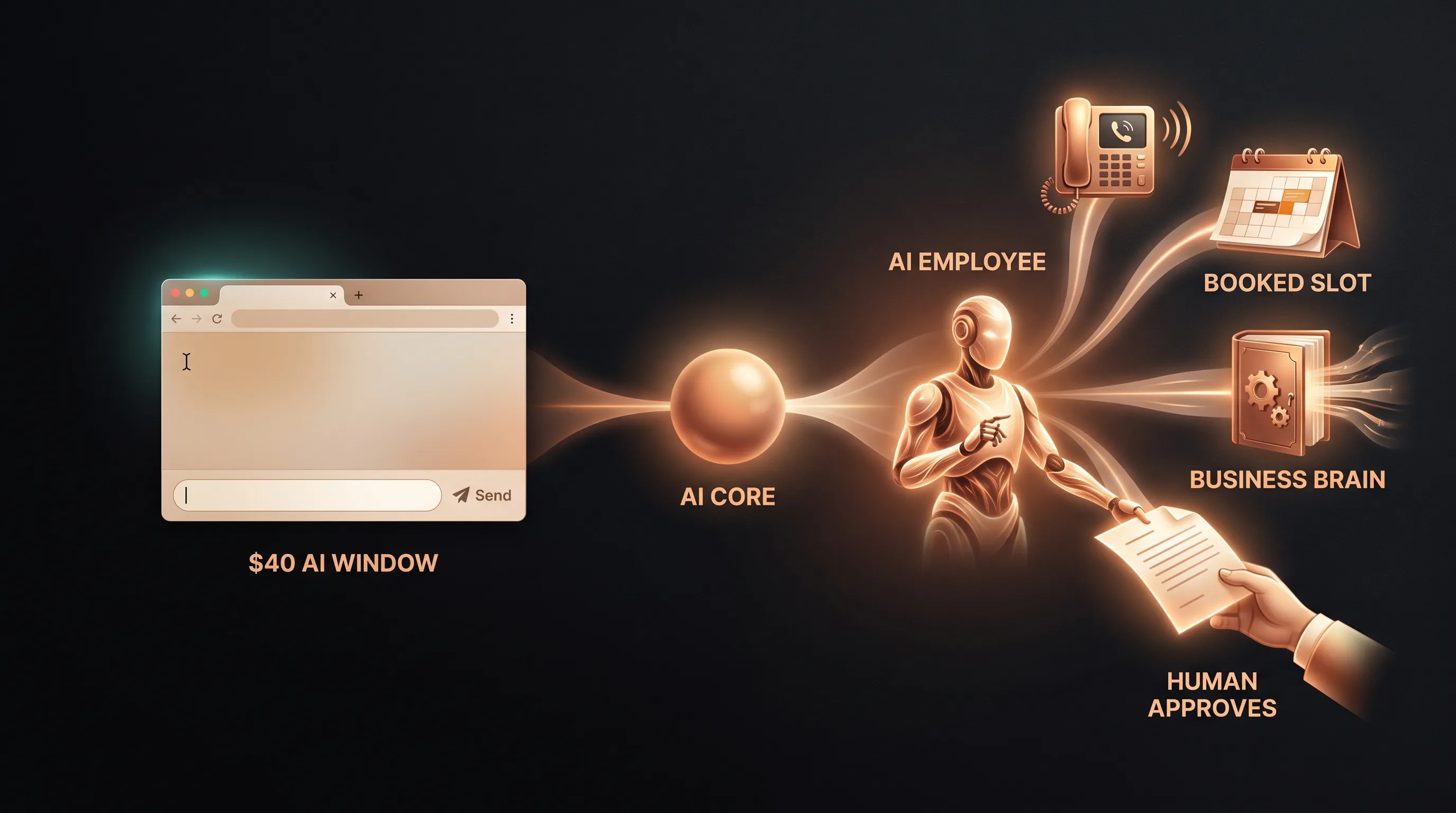
For forty dollars you get a smart window. You open it, you ask a question, you get a competent answer, you close it. What you do not get is the after-hours call answered, the appointment booked correctly, or the proposal that goes out on time without you. The seat is real. The employee isn’t.
Adoption is easy. Integration is the wall
Goldman Sachs surveyed owners in its 10,000 Small Businesses program and found the same split from the other side. Only 14% said AI was fully embedded in their core operations. Seventy-three percent said they need more training and support just to implement and evaluate it.
Read those two numbers together and the picture is clear. Buying AI is a solved problem. Getting it to actually run part of your business is where almost everyone stalls. The plumber, the electrician, the tax preparer already have a full-time job. The last thing they have time to do is a second one, wiring a general assistant into their intake, their calendar, and their follow-ups.
The gap is the work, not the model
Here’s the part that gets missed: the model in your forty-dollar window is genuinely good. It’s the same frontier intelligence a large company uses. The difference isn’t brains. It’s everything built around the brains — the connection to your phone line, the knowledge of your policies, the standing instruction to follow up in two days, the person who checks the draft before it goes out.
That wiring is real work, and it’s the work a subscription doesn’t include. A seat gives you access to intelligence. It doesn’t give you an outcome.
What you’re actually trying to hire
The fix isn’t a better window. It’s turning the intelligence into an employee — one that shows up to the work instead of waiting for you to bring the work to it.
- It runs on your business, not the average one. An AI employee answers from a Business Brain — your policies, your standard replies, your quoting rules — so what goes out sounds like your company, not a generic assistant.
- It’s managed, so it’s not your second job. Someone wires it into the phone, the calendar, and the follow-ups, and keeps it running. You don’t become the integration department.
- A person still signs off. The AI employee drafts and acts; your team approves before anything reaches a customer. Nobody rubber-stamps a black box.
Forty dollars a month for a window you have to remember to open is not a bad deal. It’s just not the deal you thought you were making. You wanted the 7:14 pm call answered. That takes an employee, not a seat — which is exactly the difference we spell out in what a managed AI employee actually is.