
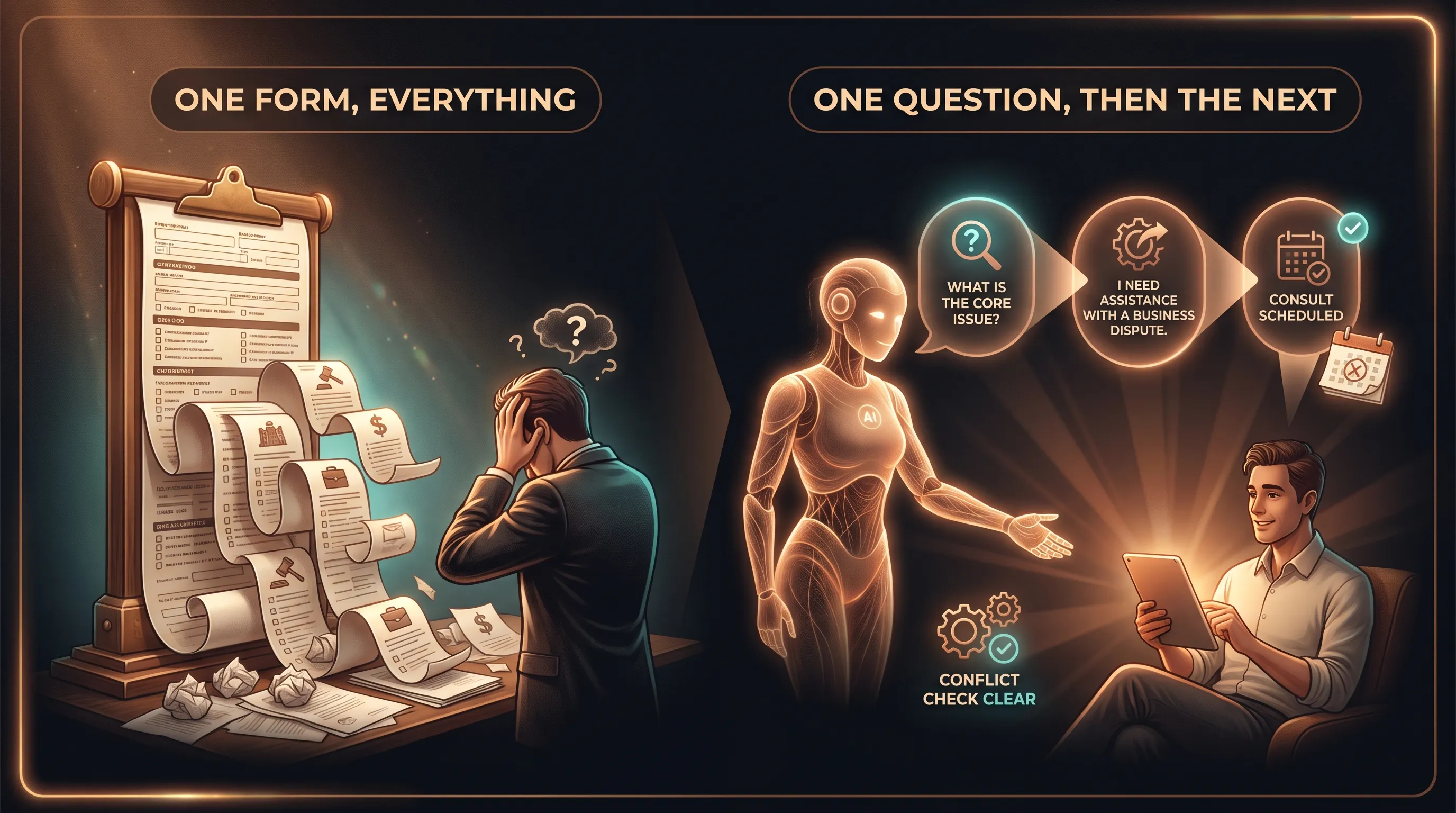
Look at your intake form. Twenty-two fields, a matter-type dropdown no client understands, and a question about how they heard about you that they will answer with “Google.” A person with a fresh legal problem takes one look and closes the tab.
The best intake isn’t a longer form. It’s a conversation that asks one good question at a time and already knows which question comes next.
The bar is on the floor
Intake is where firms lose cases before they start, and most of the industry is losing them badly. In Clio’s secret-shopper study of law firms, only 40% answered the phone, down from 56% five years earlier, and nearly half were unreachable by phone at all. The firms that do respond often make the prospect fill out a wall of fields to earn a callback.
Either way, the client feels like a ticket instead of a person with a problem. And the problem is what they came to talk about, not their entity type or their referral source.
One good question, then the next
A form asks everything at once because it can’t think. It has no idea which answer matters, so it demands all of them. Clerko asks the way your best intake coordinator does: one question, shaped by the last answer. Personal injury? It asks when and where it happened, not about a business entity that doesn’t exist. A landlord dispute? It goes down that path instead.
It runs the conflict check quietly in the background before anyone spends a minute on the matter. When an answer opens a new thread, it stops and follows it. When the case is simple, it stays short. The client answers five questions that feel relevant instead of twenty-two that feel like a line at the DMV, and you get a matter you can actually evaluate.
The shortest path to a booked matter
We learned this on ourselves. We cut our own assessment from nine questions to four, because every extra field cost us answers, which we wrote about in why we cut our own form. Intake runs on the same law. The goal was never to collect data. It’s to understand the matter well enough to book it and flag the exceptions.
That understanding is exactly what a form can’t fake and a generic assistant can’t reach, the same gap behind why every AI failure is the same failure. It takes an AI employee that knows your practice areas and your fee ranges to ask the right next question, which is the whole reason we built one to own the intake end to end.
One relevant question at a time beats twenty that scare the client off. That isn’t a softer intake. It’s the one that fills the calendar.