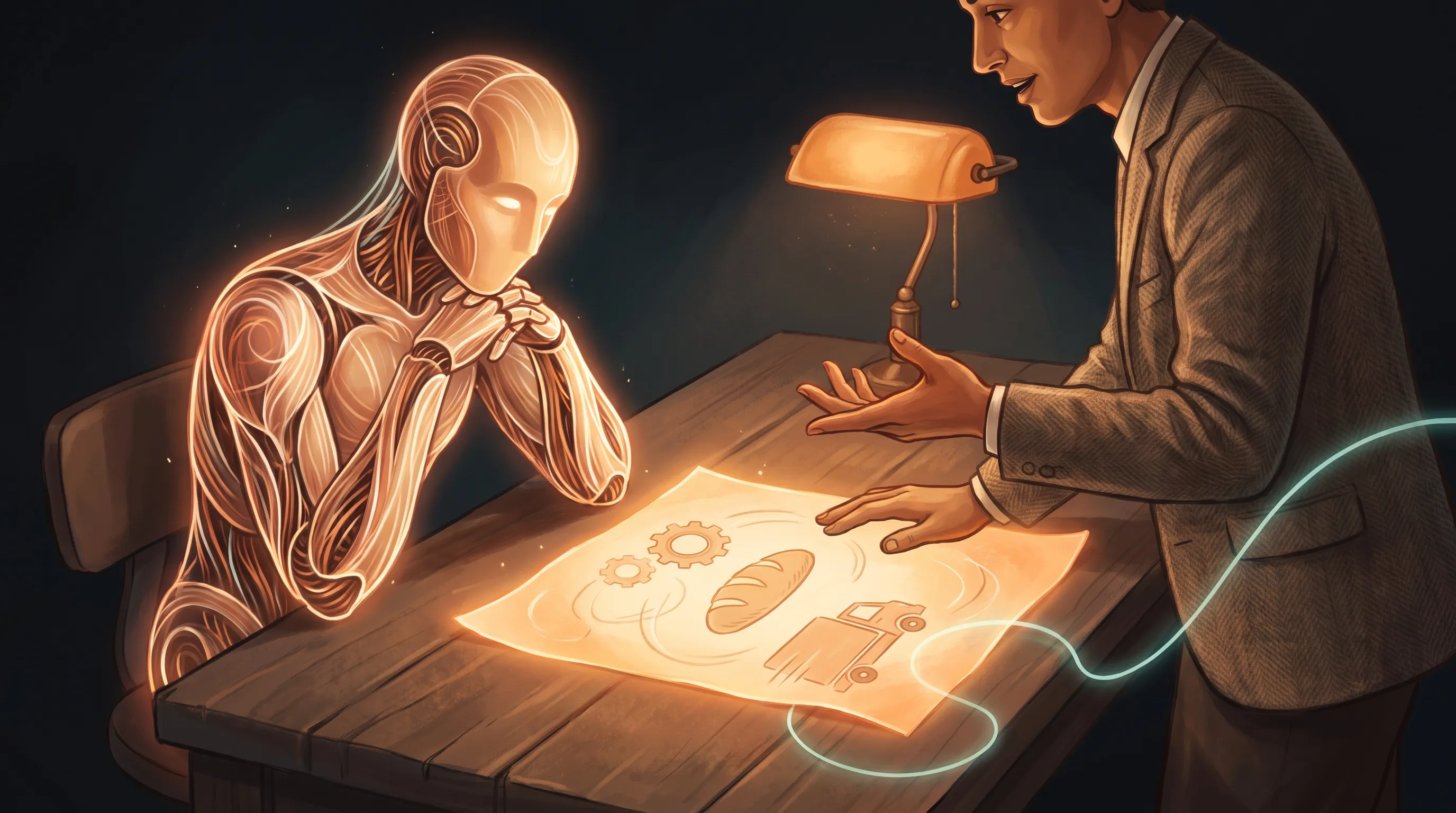
Your team keeps asking you how things get done, and you keep answering, because the how lives in your head. In my latest video I show how to get it out without sitting down to write a manual. You talk, the AI employee writes it up, your newest hire tests it, and fewer questions land on you.
Start with the question you keep answering
An SOP is just how a task gets done here, written down so someone can do it without asking you. Most owners know they need them. They never get written, because writing one means a blank page plus remembering every step of something you do on autopilot. So it waits for a slow week, and there is never a slow week.
Don’t try to map every process first, that is how these projects stall. Here is the rule instead: every question your team asks you twice is a procedure that doesn’t exist yet. Point the AI employee at your email and ask which questions came up more than once this month, grouped by task. For Teresa, who runs a catering company of about twenty-five people, one task wins by a mile, packing for off-site events, and that becomes her first SOP.
The cost of leaving it in your head is bigger than it feels. Teresa is the only one who knows how every event gets packed, so on event days her phone never stops. That is what it looks like when a process lives in one person: the business can’t run the task without them in the room. A written procedure is how you stop being the place where that knowledge is stored.
Talk it through, then let it interview you
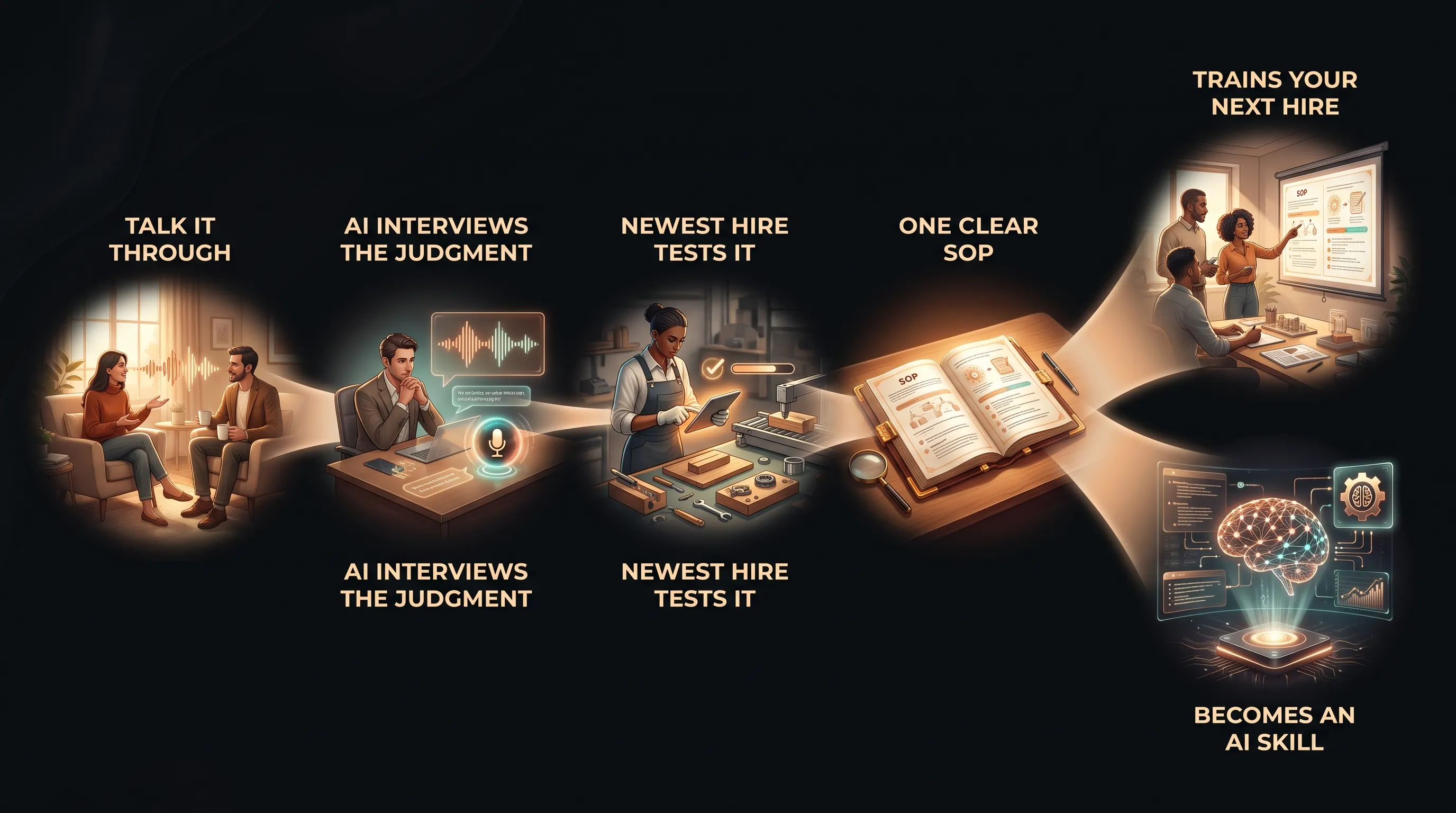
You can say a task faster than you can type it, so record yourself doing it while you narrate. Your hands remember the steps your memory skips. Hand the recording over and ask for a procedure written for someone in their first week, short steps, one action each, and marked where something is missing instead of filled in with a guess.
Then the part most people skip. The draft has the steps, but not the judgment, the calls you make without thinking. So ask the AI employee to interview you, one question at a time, hunting the exceptions and the mistakes a newcomer would make, and to stop only when someone could run the task without calling you. Keep the reasons, not just the rules. “Labels go on the lid, not the side, because the side gets hidden once the pan is in the rack.” Steps tell people what to do. Reasons cover the case you forgot to write down.
You’re the worst person to test your own SOP
You fill the gaps without noticing, so you are the last person who should check your own page. Hand it to your newest hire during a real event and stay quiet while they work. Every pause is an edit. Teresa gives hers to Andre, three weeks into the job, and his two pauses, where is the spare fuel and who checks the allergy labels, become two new lines. A missing spoon is an annoyance. A wrong allergy label isn’t.
Now the part owners miss. A clear procedure is exactly what an AI employee needs to run the task itself. The same page that trains your next hire becomes a skill it runs each morning, checking for newly confirmed orders and building each packing list the way you would. If it lives only in your head, only you can do it. Write it down once and it trains both your next hire and your AI. That is the quiet version of training it on your business, and the best insurance for when your best person leaves. If you want to know which of your processes an AI employee could run once they are written down, that is what a free assessment is for.