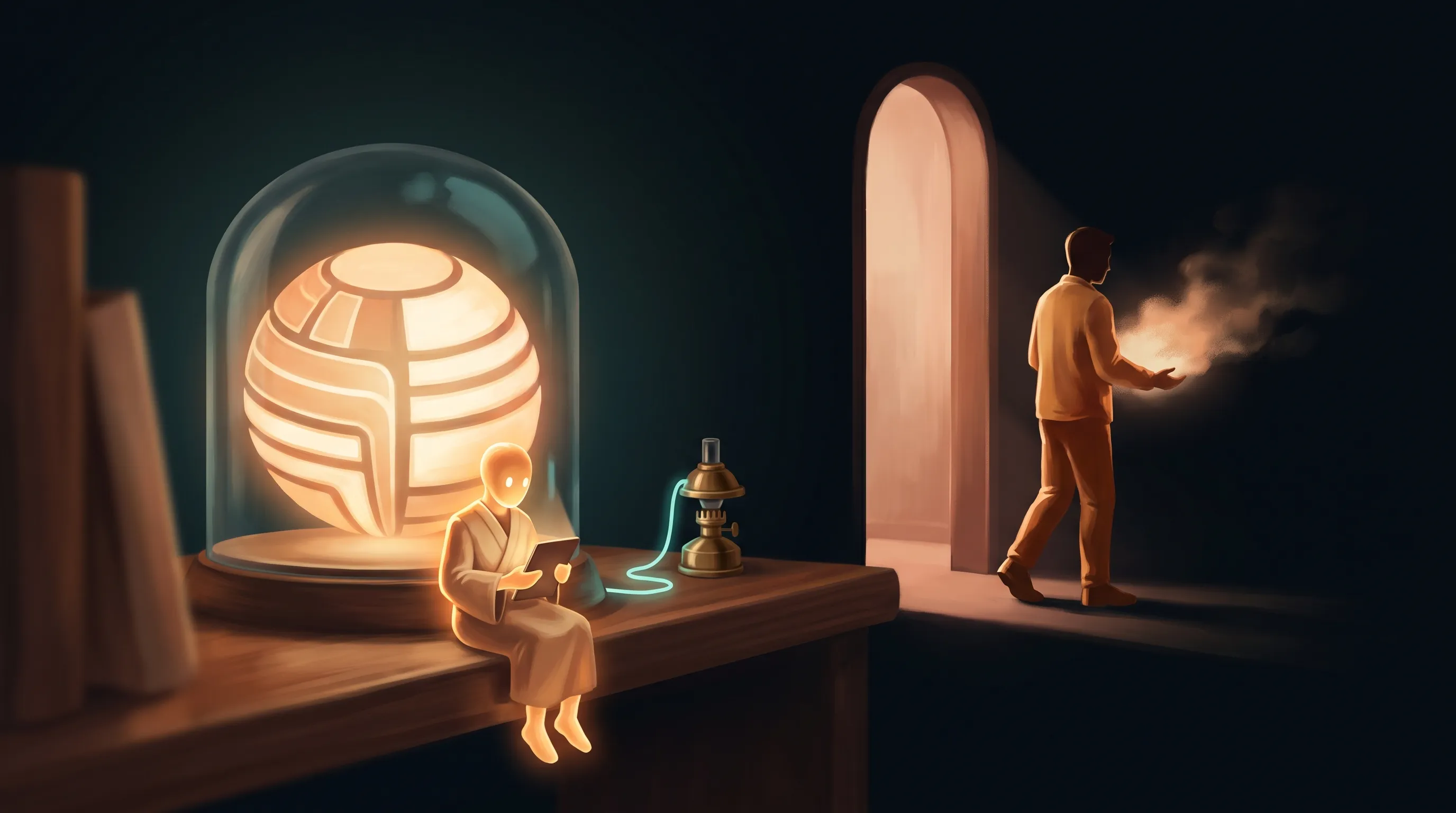
When your best person gives notice, the thing you’ll miss isn’t on their résumé. It’s everything they never wrote down. Which vendor to call when the usual one is slow. Which client needs a heads-up before an invoice goes out. The workaround for the thing that breaks every March. They carried a working model of your business in their head, and on their last Friday it walks out with them.
Everyone knows this loss and almost nobody prevents it. We treat it as weather — sad, unavoidable, the cost of people being people. It isn’t unavoidable. It’s a memory problem, and memory is something you can choose to own.
Memory isn’t the enemy, ownerless memory is
There’s a fashionable worry that AI “memory” is a liability: it hoards junk, remembers the wrong things, quietly drifts. That’s a fair complaint about ownerless memory, the kind that accumulates on its own with no one deciding what’s worth keeping. It’s not a complaint about memory itself.
Good memory is the opposite of a junk drawer. It’s the deliberate merge of what’s in your head with a system that holds it, maintains it, and hands it back on demand. The enemy was never remembering. It’s remembering with no owner: the same failure as documentation nobody maintains, a wiki nobody trusts, a shared drive where things go to be forgotten in an organized way.
Knowledge that walks out the door
The scale of the quiet loss is bigger than it feels. Research from Panopto found that 42% of the knowledge needed to do a given job is held by only one person, acquired for that role, written down nowhere, shared with no coworker. Nearly half of how the work gets done exists in exactly one head. The same study pegged the drag of that scatter at $47 million a year in lost productivity for a large business, most of it people re-finding or reconstructing what someone already knew.
You feel a smaller, sharper version of that every time someone’s out sick and the answer to a routine question is suddenly gone. Multiply it by a resignation and you get why a departure can set a small team back months.
An employee that remembers, and you own
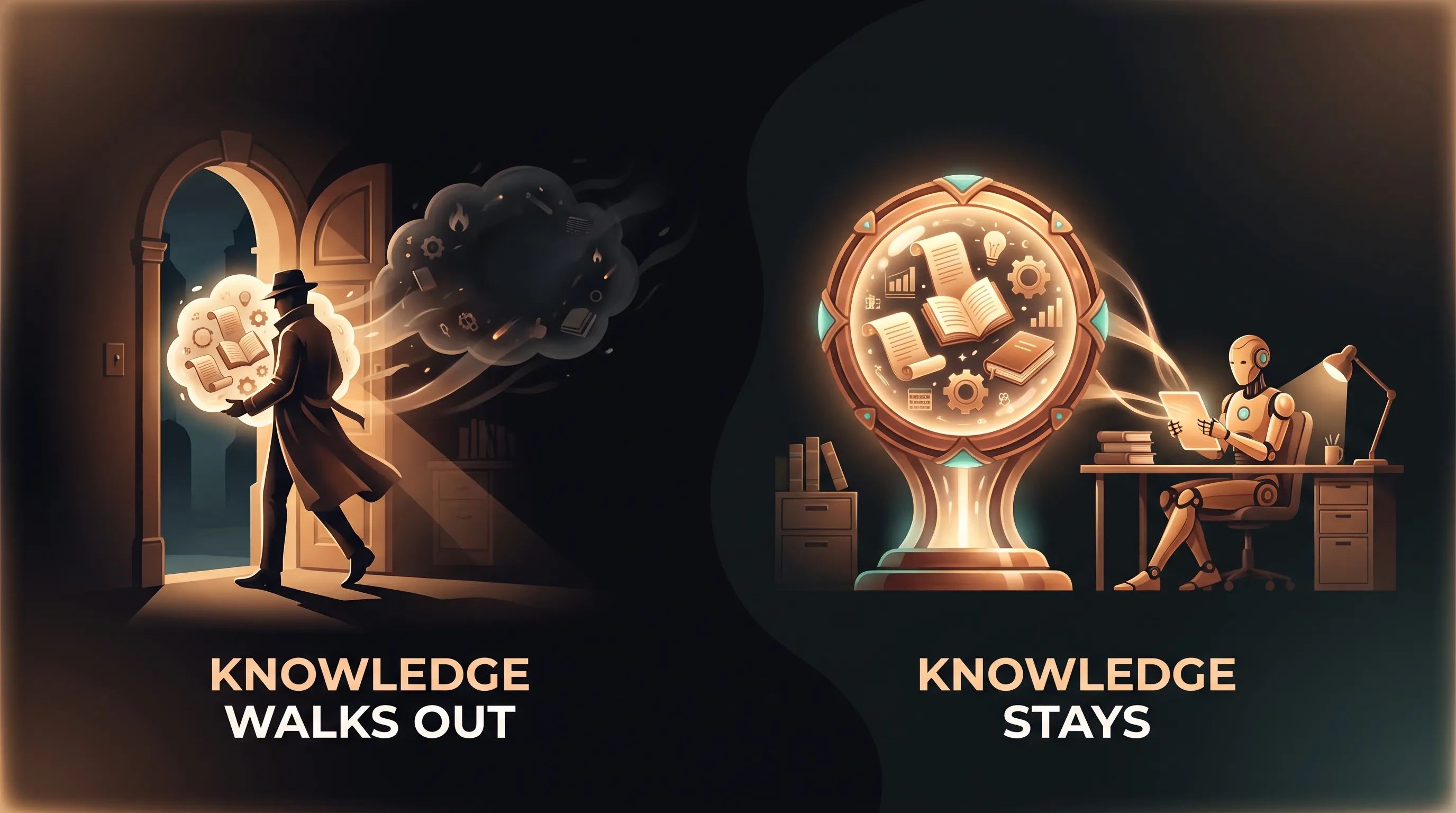
This is the part an AI employee is good at, if it’s built right. Its memory is the Business Brain, the maintained, organized record of how your business runs. When it learns that a client is prickly or that a policy changed, that lands in a place you own, not in a chat window that resets by morning. The knowledge stops being tacit and starts being durable, and it’s yours. That’s the same reason we’re insistent that you own the employee, brain and all.
So the next time someone leaves, they take their talent and their relationships, as they should. What they don’t take is the operating manual for your business, because that never lived in only one head. It lived somewhere you own, and it’s still there on Monday: the difference between a business that forgets every morning and one that finally remembers on purpose.