
The most common complaint I hear about AI is that it sounds stiff and generic, like it could be writing for anyone. It can, because out of the box it’s the same model your competitor uses, and it learned from the internet. It knows nothing about you. In my latest video I walk through the fix, and it’s smaller than people expect: five plain pages.
You’re not training it, you’re handing it pages
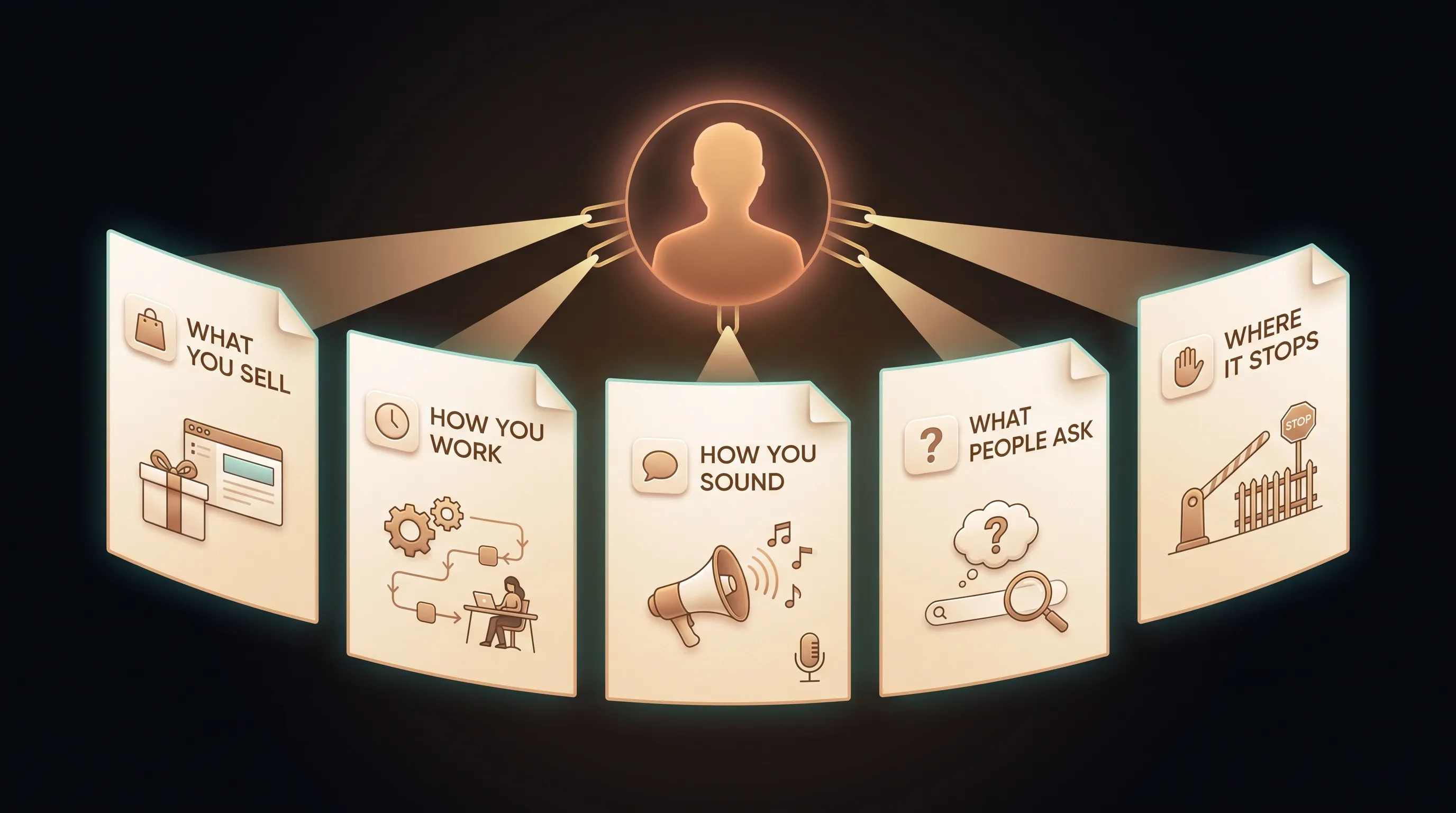
Forget the word training. You’re handing an AI employee a few pages to read, and its answer is only ever as good as what it reads first. The five pages are simple: what you sell, how you work, how you sound, what people ask, and where it stops.
Grounding matters more than people think. A Stanford study found leading legal models, asked real questions, hallucinated on at least one in six queries. Confident, wrong, and happy to invent a timeline you never promised. Give the AI employee your pages and it stops guessing, which is the same reason a generic chat window forgets your business the moment you close it.
The page most people skip
Page one is your services in plain words, and the line that does the real work is what you don’t do. Without a clear “we don’t handle taxes,” AI says yes anyway, because yes sounds helpful. The bookkeeping firm’s page that says bookkeeping and not taxes is the page that declines the wrong job kindly.
The page everyone skips is voice. Make two lists, words you use and words you’d never use, then paste in three to five real replies you were proud of, greeting and sign-off included. That’s what teaches an AI employee to sound like you instead of like everyone else. Strip names, emails, phone numbers, and account numbers before anything goes in.
Fix the page, not the reply
The last two pages are the questions you answer over and over, pulled from your sent folder, and the hard limits where the AI employee has to stop and hand off to a person. Write each limit as a plain sentence with a reason. “Don’t quote a figure, because every job is different. Offer a short call instead.” Name when it pulls in a human: an upset customer, a legal question, anything about billing.
Then test it with ten real questions. When an answer comes back wrong, resist the urge to rewrite the reply. Fix the page. That’s the whole discipline. For the first few weeks, a person reads every reply before it reaches a customer, and once a month you reread all five pages, because a stale page is worse than none. It’s part of what an AI employee needs before day one, and it’s less work than it sounds.
Five pages is the difference between an AI employee that sounds like the internet and one that sounds like your business. If you want a hand writing yours, a free assessment is where we start.