
In a demo we recorded, a caller phoned a meat market and opened with “Buenas, ¿tiene New York strip?” The AI employee answered in Spanish and stayed there for the whole call. You can hear it in the recording.
It’s a small moment that most businesses get wrong every day. The caller didn’t have to ask whether anyone spoke Spanish. Nobody put them on hold to find someone. They were just answered, in their own language, and served.
The customers you can’t hear
Here’s the size of what an English-only line misses. About 44.9 million people in the US speak Spanish at home, roughly one in seven. In a place like Miami it’s not a slice, it’s the market: Miami-Dade County is about 69% Hispanic.
When one of those callers reaches a line that only works in English, you don’t get an angry review. You get silence. They hang up and call someone who can help them, and you never learn the call happened. It’s the most invisible kind of lost business, because there’s no missed voicemail to feel bad about later.
Language is loyalty, not translation
This isn’t really about translating words. It’s about whether a customer feels like your business is for them.
The research is blunt about it. In a global study of more than eight thousand consumers across 29 countries, 76% said they prefer to buy when the information is in their own language, and 40% said they’ll never buy from a business that only speaks another. The same study found people are far more likely to stay loyal when the service after the sale is in their language too.
So a caller who gets answered in Spanish isn’t just more likely to place this order. They’re more likely to come back, and to send you their family. Language is the front of that relationship, not a footnote to it.
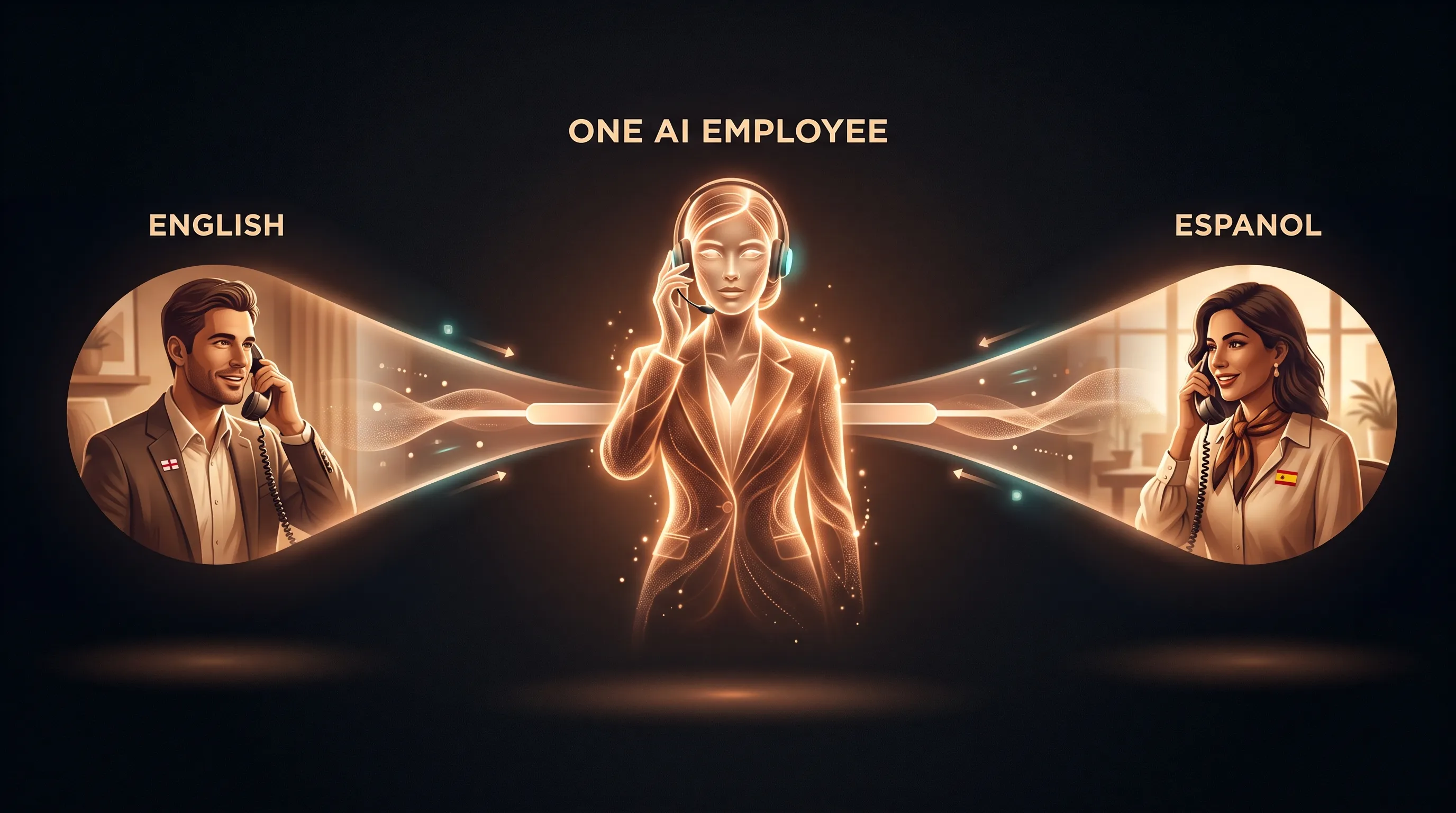
Not a second hire, the same employee
The usual fix is to hire bilingual staff and hope one of them is free when a Spanish call comes in. That works until the schedule gets thin, and it never covers nights and weekends.
An AI employee handles it differently. It answers in the language the caller uses and switches mid-sentence if they do, on every call, at every hour. There’s no separate Spanish line to set up and no second person to schedule. When a call genuinely needs a human, it hands off with the details already written down, in either language, so nobody starts over. That’s the same reframe we made in you’re already paying for the employee you haven’t hired: this isn’t a new cost, it’s a leak you’re already absorbing.
Your customers are already calling you in Spanish. We heard one do it in the demo, and you can see how the order got taken start to finish in she took the order in Spanish. The only question is whether anyone is there to answer.