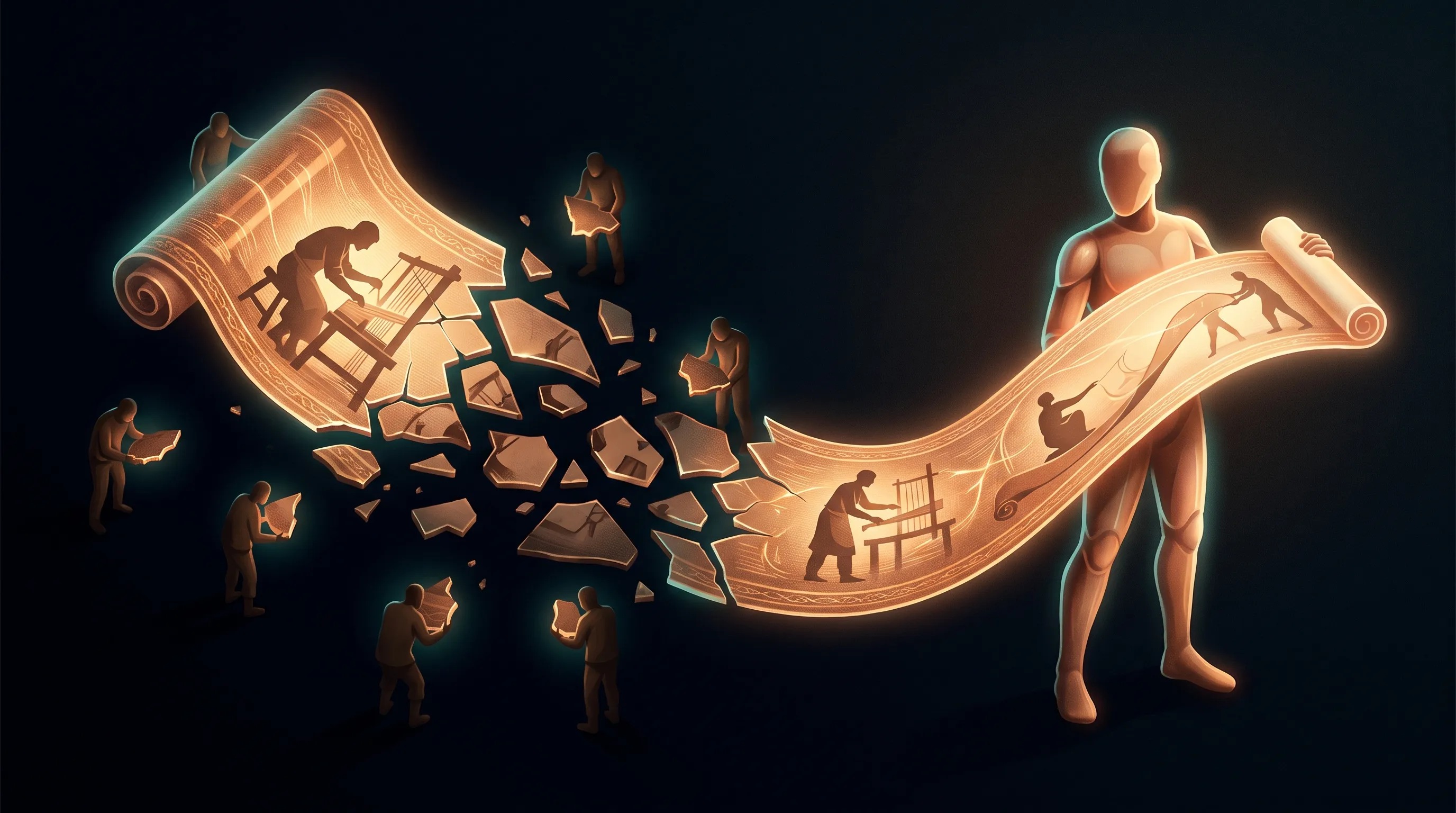
We spent a decade teaching everyone to break work into the smallest shippable piece. Split the epic into stories, the story into tickets, the ticket into a task nobody could possibly misunderstand. I ran teams that way. It felt like rigor.
Then I started handing work to AI, and I watched that same instinct quietly backfire.
Decomposition earned its reputation
I want to be fair to the idea, because it wasn’t wrong. Breaking work down is how you scale humans. A person can only hold so much in their head, so you slice the job into pieces small enough to hand off, track, and hand back. Assembly lines, org charts, sprint boards: all of it is decomposition, and all of it worked. It let a hundred people build something none of them could hold alone.
So the reflex is deep, and for good reason. When a job feels too big, you split it. That’s been the right move for so long it doesn’t feel like a choice anymore.
Then you hand it to a machine
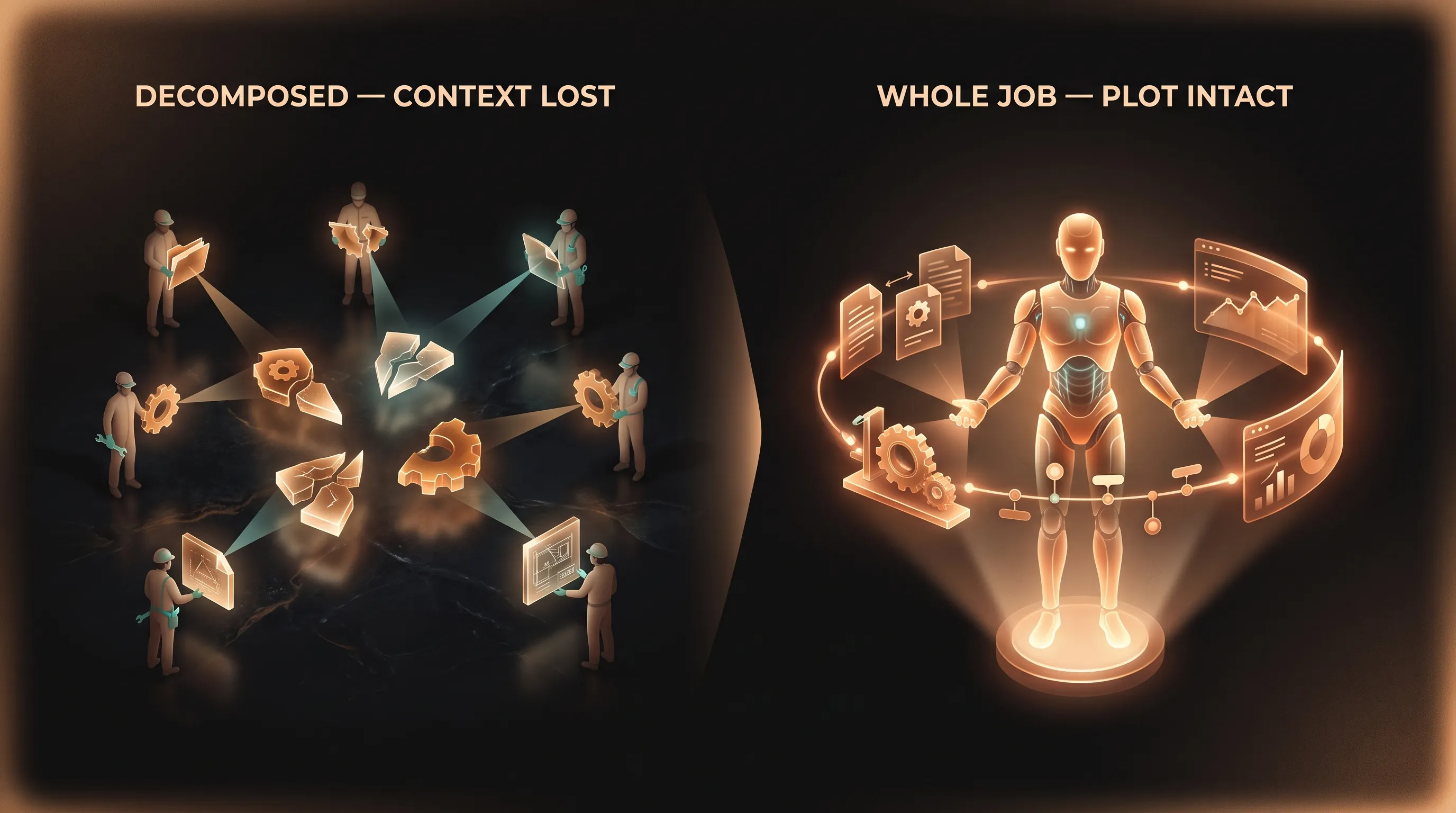
Here’s where it breaks. When you shred a job into disconnected pieces and hand each piece to a separate agent, every piece loses the one thing that made the work coherent: the context around it. The agent drafting the reply doesn’t know what the agent reading the file learned. The plot goes missing, one slice at a time.
This isn’t a hunch. Cognition, a company that builds serious AI engineering systems, wrote a whole piece arguing against exactly this pattern. Chop a task across parallel agents and, in their words, “context isn’t able to be shared thoroughly enough between the agents.” The decision-making scatters, and the result is fragile: impressive in a demo, unreliable the moment the real work has an exception in it. Which real work always does.
The plot is the whole job
Think about what you’re hiring for. Not forty micro-tasks. One outcome: every inbound lead answered well and booked, every renewal caught before it lapses, every customer handled the way you’d handle them. That outcome only makes sense whole. The exception in step two is exactly what should change step five, and a piece can’t know that if it can’t see the rest.
A person who’s good at their job holds the plot without trying. They remember that this client is prickly, that this month is always slow, that the “standard” reply is wrong for this one account. Shatter that job into pieces and you don’t get their judgment faster. You get their judgment never, because judgment was the connective tissue you just cut.
Give it the whole job
So we build the opposite of a swarm. One AI employee that owns a whole job, holds the whole context, and carries the plot from the first step to the last. Not because more agents is impossible, but because for a founder-led business it’s the wrong shape, the same reason you don’t need 300 agents and the reason it pays to be clear about the job you’re really hiring it to do.
Break the problem down if you must, to understand it. Then hand it over whole. The pieces were never the point. The plot was.