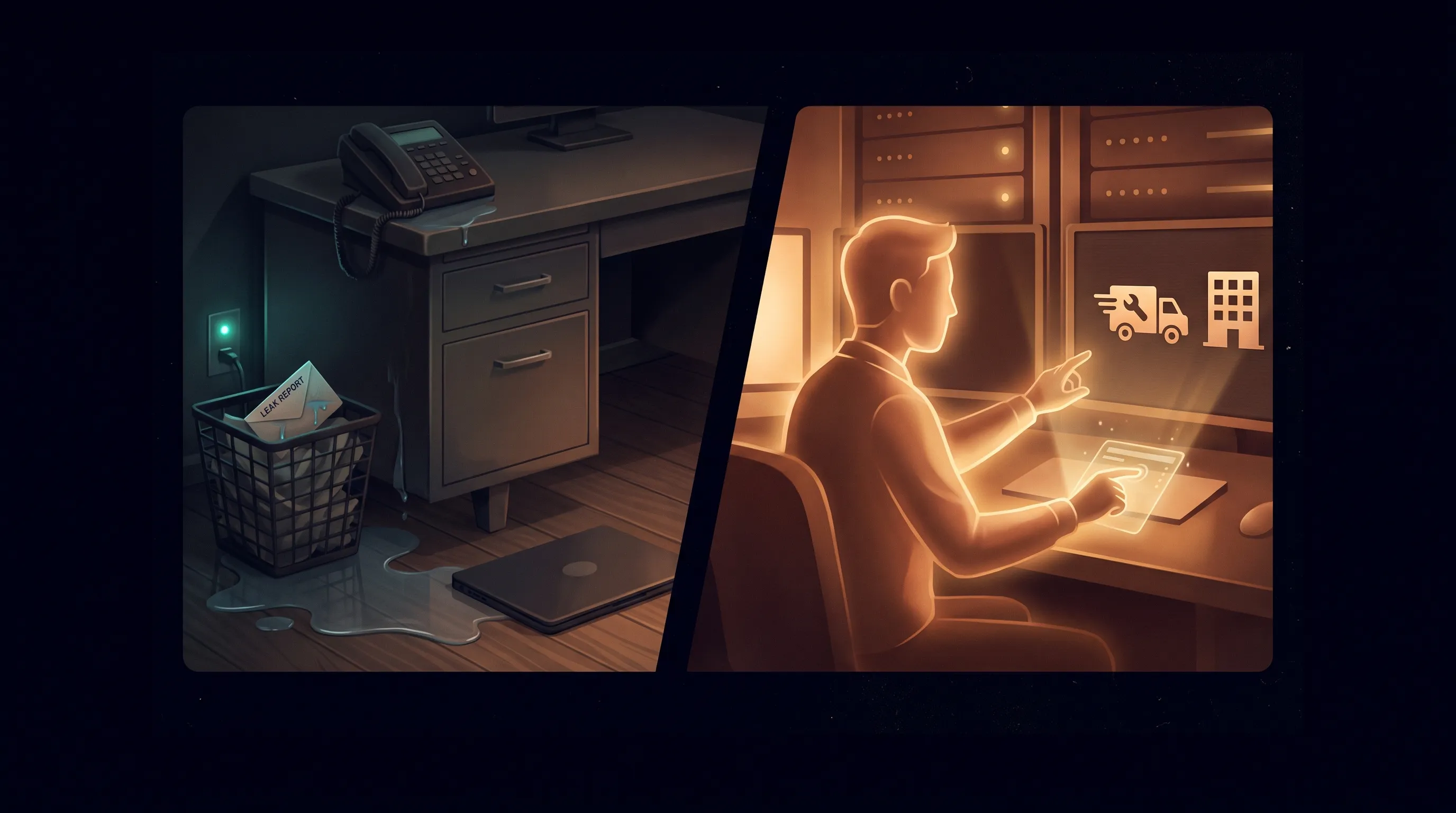
A tenant hears water running inside a wall at 9pm on a Friday. She calls the property manager, gets voicemail, and leaves a message describing the leak. Then she waits. Nobody calls Saturday. Sunday passes the same way. By the time the office opens Monday, the message is one of a dozen, the drywall is ruined, and she has spent an entire weekend feeling like nobody was coming. The repair got more expensive. So did keeping her. At renewal, she’s gone.
That weekend of silence is one of the most expensive things a property manager can do, because losing a tenant is not a small number. Turnover runs about $3,872 per resident once you add up marketing, repairs, concessions, and lost rent. And the thing that drives that churn isn’t usually rent. It’s maintenance. The National Apartment Association found poor maintenance response is the number two reason renters don’t renew, second only to rent. So let’s walk through that Friday leak the old way, then what changes when an AI employee owns intake.
The old way
The call comes in at 9pm Friday. Here’s the weekend:
- The office is closed, so the call rolls to voicemail or an answering service that takes a message and can’t dispatch anyone.
- The tenant waits, because what else can she do. Every hour of silence tells her that her emergency isn’t one to you.
- The water keeps running. A leak that a Friday-night plumber could have contained becomes a Monday-morning restoration job.
- Monday, the message joins the pile. The team triages a backlog of weekend requests, and hers isn’t obviously the worst one.
- She doesn’t file a complaint. She just quietly decides not to renew, and that decision doesn’t show up in any report until the notice comes.
None of this is a manager who doesn’t care. It’s that a person can’t answer the phone at 9pm Friday, and a weekend backlog is a reasonable thing to face on Monday. The problem is that maintenance is the exact thing residents judge you on: 46% say maintenance is a key reason they renew, and 31% who leave blame poor maintenance. And the weekend is when you’re least able to answer.
The AI employee way
Same 9pm Friday leak, except the company has an AI employee named Vivian handling intake. Vivian has read the company’s Business Brain, so she knows the properties, the units, the vendors, the on-call rules, and what counts as an emergency versus a Monday ticket.
Here’s the same weekend:
- The phone rings and Vivian answers on the first ring, Friday night or Sunday morning, in the company’s voice.
- She gets the details a good coordinator would: which unit, what’s happening, how bad, is it spreading, and she reassures the tenant that it’s logged and moving.
- Active water damage is an emergency by the company’s own rules, so she dispatches the on-call vendor right then instead of letting it wait for Monday.
- Routine requests she logs, categorizes, and schedules, and sends the tenant a confirmation so they know it’s handled.
- Every request is recorded and acknowledged the moment it comes in, so nobody spends a weekend wondering if anyone heard them.
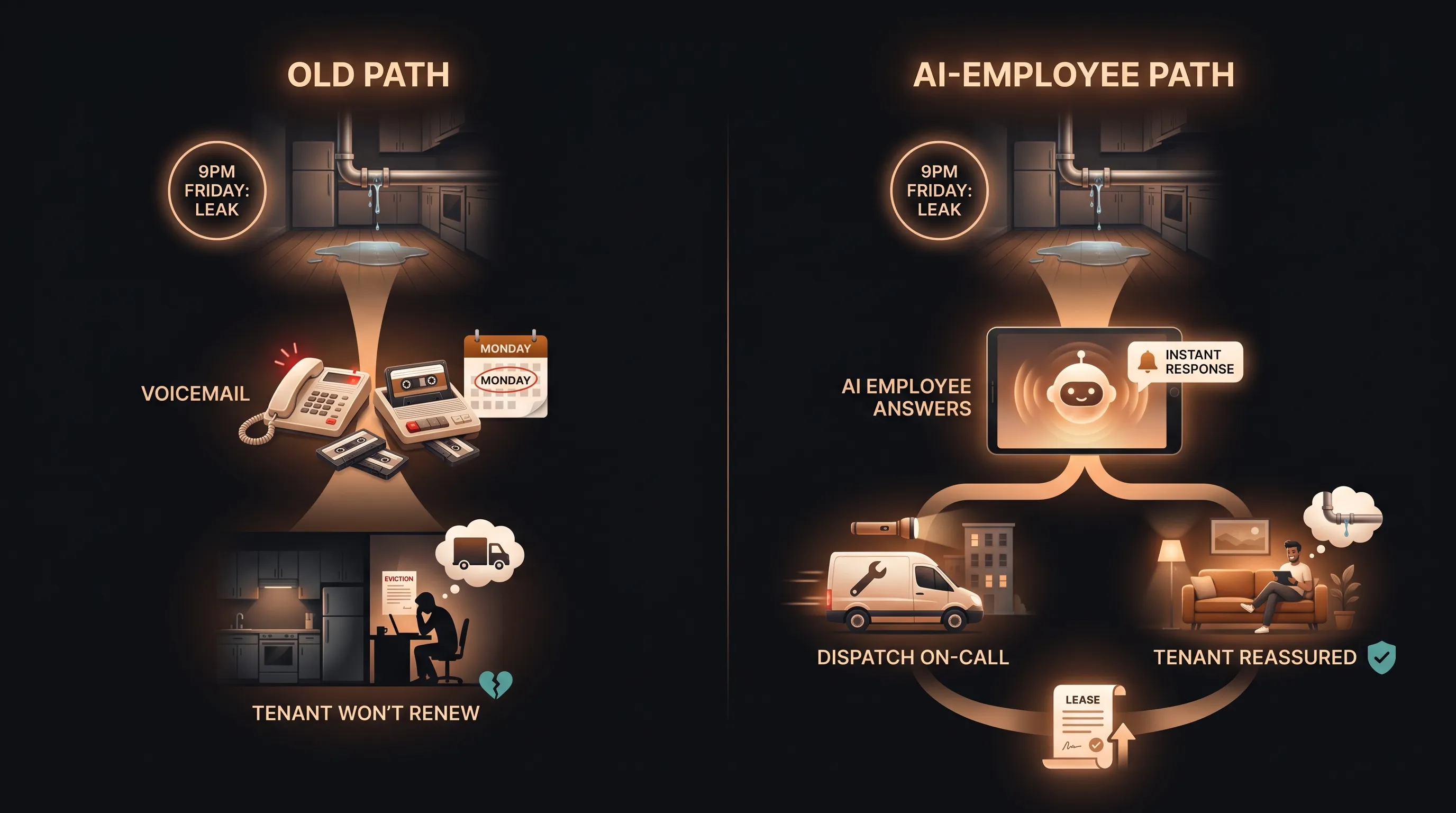
The tenant never spends a weekend in silence. The leak never waits three days to get worse. And the office opens Monday to a handled emergency and a clean queue instead of a pile of anxious voicemails.
Why the tools you tried didn’t do this
Most companies have an answering service or a maintenance line. It takes a message, which is not the same as handling a request. It can’t tell an active leak from a squeaky door, can’t dispatch the on-call plumber, and can’t tell the tenant anything except that someone will get back to them. So residents still spend the weekend waiting, and the message still lands in Monday’s pile.
Vivian works because of what sits behind her: a Business Brain built from how your company runs its properties. That’s the piece the answering service was missing. She doesn’t just record the leak, she triages and moves it. And it compounds: acknowledging every request the moment it arrives is what a one-point rise in tenant satisfaction lifting renewal odds by 8.5% is made of.
Maintenance intake is the right place to start for one plain reason: you can put a dollar figure on a lost tenant, and slow response is what loses them. It’s the same after-hours gap that hands home-services jobs to whoever picks up second, moved to the resident deciding whether to stay another year. Answer every request the moment it comes in, dispatch the real emergencies, and the weekend stops quietly costing you renewals.