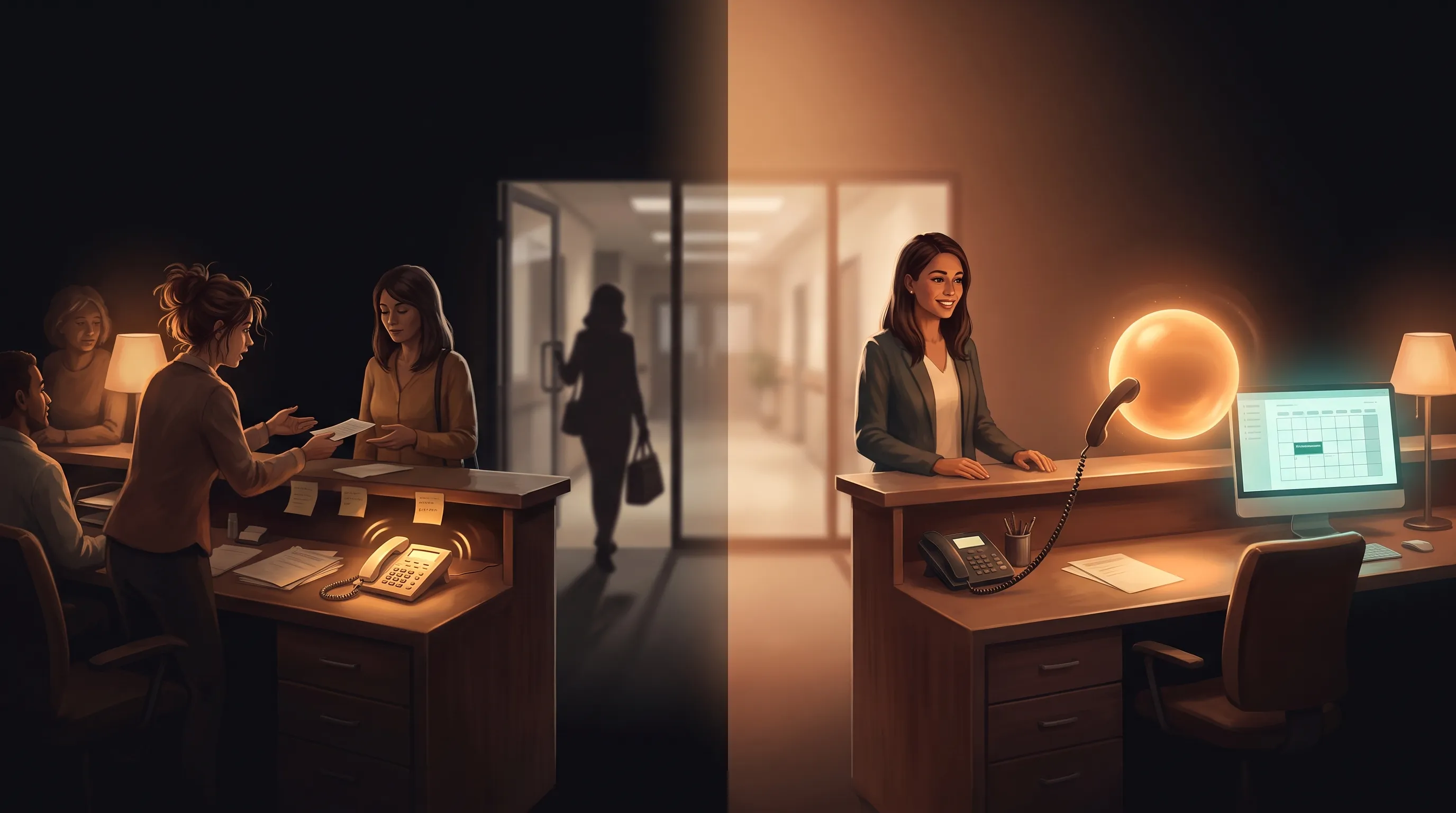
A woman cracks a molar on her lunch break and picks your practice because it’s two blocks from her office. It’s 3:14 on a Thursday when she calls. Your front desk is mid-checkout with a patient at the counter, another waiting behind her, and a hygienist leaning in with a question. The phone rings four times and rolls to voicemail. She doesn’t leave one. By 3:20 she’s booked with the office down the street, the one that picked up.
That 3pm crush is exactly when the calls get dropped, and the misses land on the highest-value callers. Peerlogic’s data shows only 68% of new-patient calls get answered — roughly one in three goes unheard. And it’s new patients doing the calling: 65% of missed calls come from people who aren’t in your chart yet, and only 14% of them bother to leave a voicemail. Against a new patient worth $4,000 to $7,000 in direct lifetime value — and $18,000 or more if they need cosmetic or implant work — a rolled call is real money walking out the door. So let’s walk through that 3:14 call the old way, then what changes when an AI employee owns the phone.
The old way
The phone rings at 3:14. Here’s the rest of the afternoon:
- The front desk is buried in checkouts and confirmations, so the call rolls to voicemail or an after-hours line that can’t book anything.
- The caller doesn’t wait. She’s in pain and shopping, so she hangs up and dials the next practice, which answers and wins her.
- Around 30% of calls arrive outside office hours anyway, and those hit a machine every time — nights, weekends, the lunch hour nobody’s covering.
- The next morning the team starts returning yesterday’s missed calls. Half have already booked elsewhere.
- Nobody tallies the ones that got away, because there’s no report for the patient who never became a patient.
Every step is understandable. Your front desk can’t be on the phone and at the counter at the same time, and 3pm is a wall of check-outs and end-of-day work. But a phone that drops its most valuable callers at the busiest hour isn’t really competing for new patients at all. It’s the same missed-call math that quietly bleeds home-services businesses after hours, just moved to the front desk of a dental office or a med spa.
The AI employee way
Same 3:14 call, except the practice has an AI employee named Maya answering the phones. Maya has read the practice’s Business Brain, so she knows the services, the insurance and plans accepted, which provider does what, the hours, and what counts as an emergency.
Here’s the same afternoon:
- The phone rings and Maya answers on the first ring — 3:14pm or 8pm — in the practice’s voice, while the caller is still deciding who to book.
- She asks the questions a sharp front-desk lead would: new patient or existing, what’s going on, how urgent, which insurance.
- A cracked tooth, swelling, a knocked-out crown — she triages by the practice’s own rules and flags a true emergency to the on-call provider right then.
- Everything else she books straight into the right provider’s column and texts a confirmation, so the caller stops shopping.
- She also works the recall list the front desk never gets to — the six-month hygiene patients who drifted off the schedule — reactivating them instead of waiting for the phone to ring.
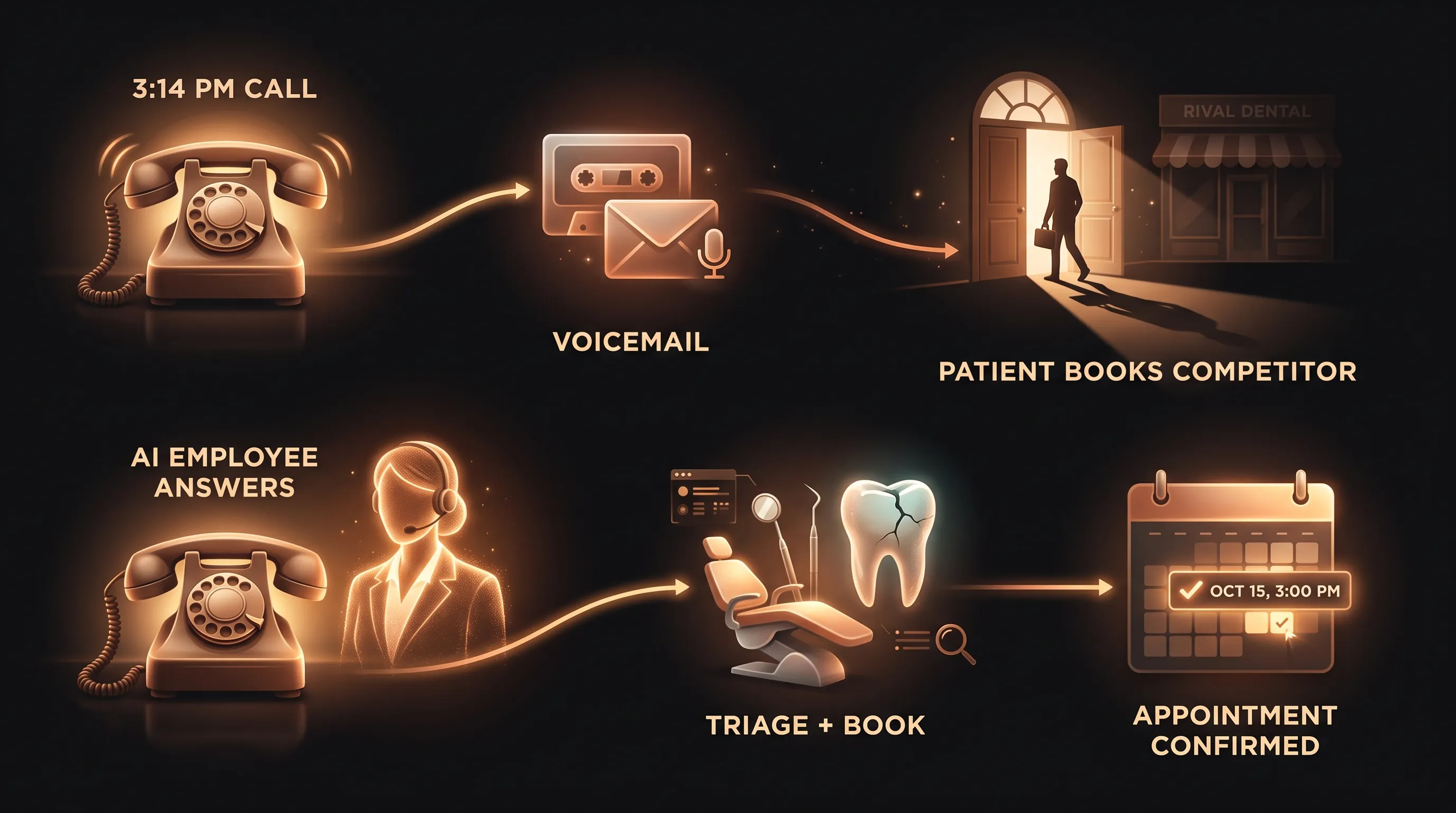
The caller never hits voicemail. The new patient never gets handed to the office down the block. And the front desk gets to be present with the person standing right in front of them.
Why the tools you tried didn’t do this
Plenty of practices have tried an answering service or voicemail-to-text. It took messages nobody could act on, or read a script that didn’t know the difference between a routine cleaning and a cracked molar, and couldn’t see the schedule to book anything. So it booked nothing, and everyone went back to letting the phone ring out.
Maya works because of what sits behind her: a Business Brain built from how your practice actually runs. That’s the piece the answering service was missing. It’s also why she sharpens each week, learning your emergencies, your insurance questions, and your booking patterns until she handles a new-patient call the way your best front-desk lead would.
The front desk is the right place to start for one plain reason: you can put a dollar figure on every missed call. Even the calls that do get answered convert only 42% of the time — so a desk freed from the ringing phone can actually work the patients who reach it. Answer every call, book the ones you can, triage the rest, and the phone stops quietly handing your new patients to the practice down the street.